
File format
Extension of the uploaded file (e.g. GLB, STL, OBJ).
Drop an STL file to instantly see vertex count, physical dimensions, volume, and watertight status, all processed locally in your browser.
Please wait
STL is the go-to format for 3D printing. This tool reads your STL and reports vertex/face counts, physical dimensions in mm, solid volume, surface area, and watertight status. Checking these before slicing helps you catch geometry problems early and avoid failed prints.
Extension of the uploaded file (e.g. GLB, STL, OBJ).
Total size of the uploaded model file on disk.
Estimated GPU usage for geometry buffers plus textures (including mipmaps).
Number of vertices in the mesh geometry.
Number of triangular faces in the mesh.
Bounding box dimensions in millimeters along X, Y and Z.
Solid volume of the closed mesh, from tetrahedral decomposition.
Sum of all triangle areas (square centimeters).
Whether every edge is shared by exactly two triangles. Open meshes may have holes or non-manifold edges.
Edges that belong to only one triangle, indicating holes.
Edges shared by more than two triangles, indicating non-manifold topology.
Number of independently connected mesh parts.
Vertices not referenced by any face.
Whether vertex normals are fully present (affects lighting).
Mean length of all triangle edges in millimeters.
Mean triangle shape quality; equilateral = 100%, skinny triangles score lower.
Number of materials assigned to the model.
Number of texture images embedded or referenced.
Pixel size and format of each texture slot.
Estimated VRAM used by textures including mipmaps.
Number of animation clips stored in the file.
Number of skeleton bones used for rigging and skinning.
Drop STL, GLB, OBJ, FBX and other formats
Expand each section to view metrics
Copy the report, or click animation clips to play a preview
You get file size, vertex/face counts, bounding box dimensions, volume, surface area, and watertight status. Every metric is calculated locally in your browser, so your model never leaves your device.
STL is the standard format for 3D printing. Checking dimensions, volume, and watertight status before slicing ensures the model is printable and the final part will have the correct size and solidity.
Yes, but extremely large files may take longer to process. Since all analysis runs locally, there is no file size limit other than your browser's available memory. For very large meshes, we recommend using a model compression tool to reduce the polygon count first, then analyze the optimized model for a smoother experience.
Yes, both binary and ASCII STL formats are supported. ASCII files are human-readable and easier to inspect in a text editor, but they are much larger than binary STL files.
The watertight check detects holes (boundary edges) and non-manifold edges (edges shared by more than two triangles). The quality report also tells you whether normals are present, missing, or partial. Self-intersecting triangles are not covered by this tool.
Open the mesh in a repair tool such as Blender, Meshmixer, or Netfabb: close holes, merge duplicate vertices, and remove non-manifold or intersecting triangles, then export the STL again. The analyzer only reports the issue, it does not repair the file.

Your GLB file is only 10MB, but on your phone it eats 200MB of VRAM and crashes. Let's take a closer look at what's really going on.
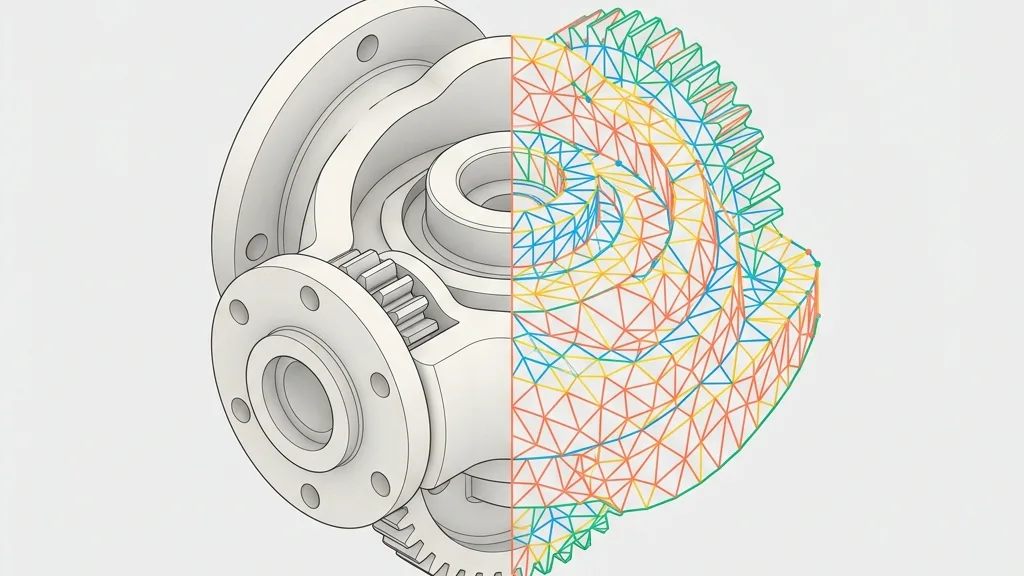
Demystifying the technical black box of converting CAD solids (B-Rep) to STL polygon meshes and back. Get practical slider recommendations for SolidWorks and other tools, plus compromise solutions when STL reverse engineering fails.
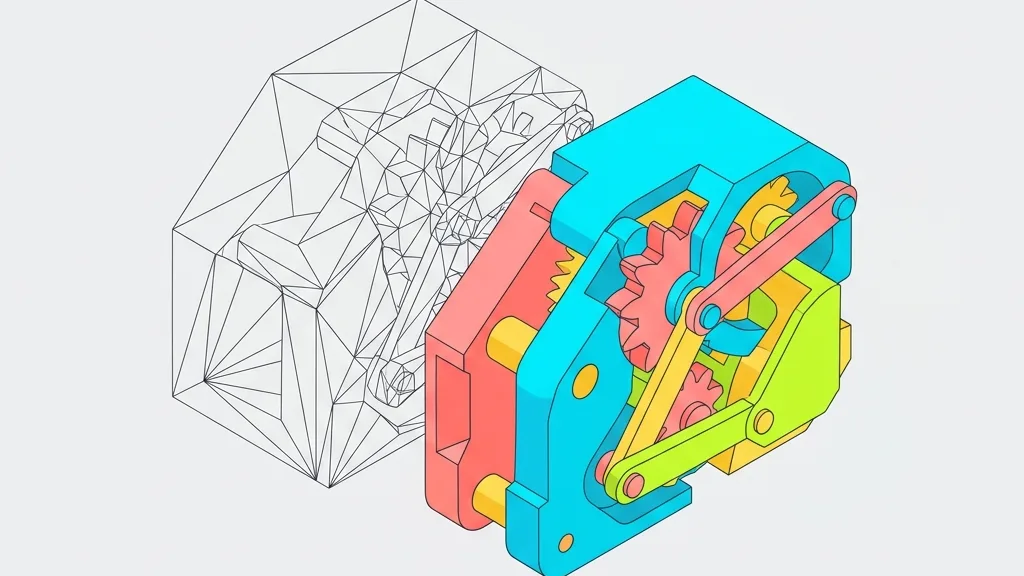
A deep-dive comparison of 3MF and STL in real-world workflows. Uncover why Bambu Studio models crash in Cura, and master unit scaling fixes and multi-color conversion tricks.

Desktop, mobile, VR, mini-programs—which compression combination should you use? This article consolidates the knowledge from the previous four articles into a decision matrix and an automation script—just follow it.