Embed resources into GLTF
Defaultoff
Separate .bin and texture files are embedded into a single self-contained GLTF.
Drop a folder or ZIP of messy model files (FBX with loose textures, GLTF split into .bin + images, OBJ missing its MTL) and get a cleanly organized ZIP with every file in its place.
Please wait
The packer scans your upload for model files, then resolves each model's external dependencies: FBX texture paths, GLTF .bin buffers and images, and OBJ .mtl material files with their map_* textures. Every model gets its own folder in the output ZIP; files that could not be matched to any model go into _unmatched.
Defaultoff
Separate .bin and texture files are embedded into a single self-contained GLTF.
Defaultoff
FBX models with separate textures are merged into a single FBX with textures embedded.
Defaultoff
Unmatched files are copied into the _unmatched folder of the ZIP. Disable to drop them from the output.
Each model file becomes a pack folder in the output ZIP, with its detected dependencies grouped alongside.
Files that no model references. Enable "Include unmatched files" to copy them into the _unmatched folder of the ZIP.
Drop a ZIP, a folder, or multiple loose model and texture files
Check how dependencies were matched and which files are missing
Get a clean archive with one folder per model
Usually not. FBX stores material and texture references, but the actual texture images are separate files. If those files are missing or scattered, the model renders without textures. This tool bundles the referenced textures with the FBX so the asset stays complete.
No. Model files are copied into the ZIP exactly as they are. The only transformation is optional: GLTF models can be embedded into a single self-contained GLTF file with textures and binary data inlined.
Unmatched files are collected in the _unmatched folder of the output ZIP, so nothing is silently dropped.
When a model references a .bin buffer, texture, or .mtl material file that isn't present in your upload, it counts as a missing reference. The pack results flag the missing count so you can add the files and pack again.
Any format the site can read is recognized as a model file: FBX, GLTF, GLB, OBJ, STL, 3MF, PLY and more. Dependency resolution is automatic for FBX, GLTF and OBJ; other formats are packed as self-contained files.
Up to 50 main model files. Models beyond the limit are skipped and flagged in the results. For more models, pack them in batches.
When a reference path in the model can't be found in the upload, the tool falls back to matching by file name; for example, texture.jpg matches a texture file with the same name. For more reliable resolution, keep textures in the same folder as the model and keep file names consistent.
Yes, Any3D's core features are free to use forever. We provide format conversion, model optimization, and online preview at no cost, with no registration required.
No. Files you select are processed only in your browser on this device, so they never leave your device and are never sent to our servers. We don't store any user files; after processing, related data in browser memory is released.
No installation required. Any3D is entirely browser-based; just open the webpage to use all features. It works on Windows, Mac, Linux, and other major operating systems.
The processing capacity depends on your device performance and the model's vertex count and texture complexity, rather than file size alone. We impose no file size limit, but when a model exceeds what your device can handle, the page may lag or even crash.
Your GLB file is only 10MB, but on your phone it eats 200MB of VRAM and crashes. Let's take a closer look at what's really going on.

Desktop, mobile, VR, mini-programs: which compression combination fits your 3D project? A decision matrix and an automation script do the choosing for you.
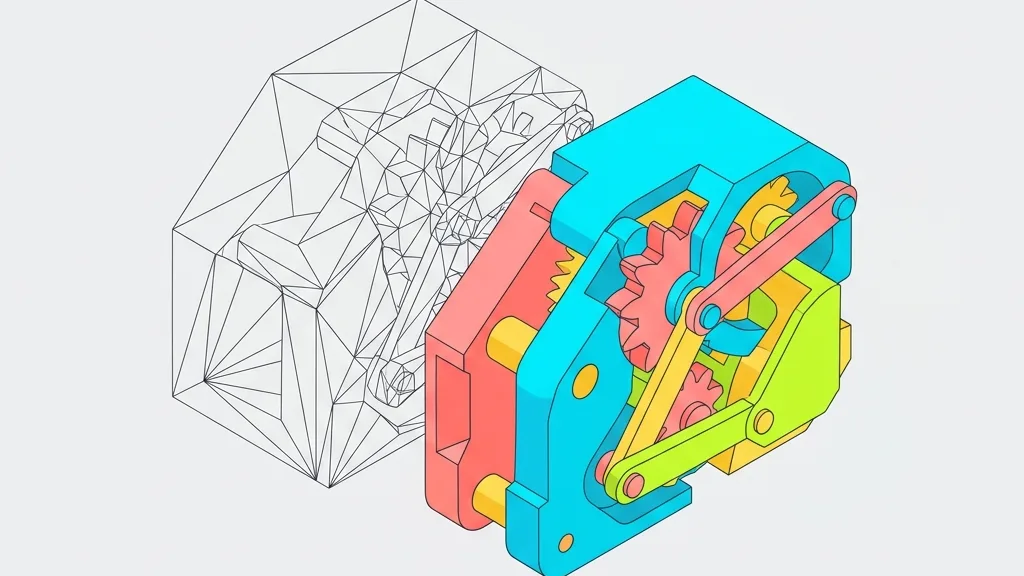
A deep-dive comparison of 3MF and STL in real workflows. Uncover why Bambu Studio models crash in Cura, and master unit scaling and multi-color conversion tricks.
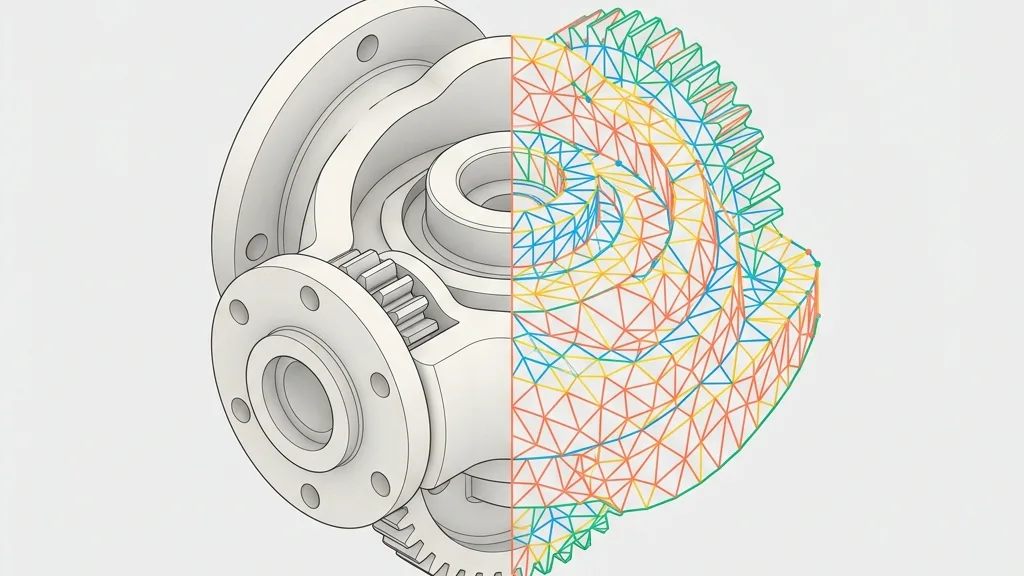
Demystifying conversion of CAD solids (B-Rep) into STL polygon meshes and back: practical slider settings for SolidWorks, plus fallbacks when reverse engineering fails.