Output Dimensions
Set the output width and height. Square presets (e.g. 1024×1024) suit texture workflows; use custom with optional aspect-ratio lock to keep source proportions. Format-conversion pages default to the source size.
WebP → JPG/JPEG: universal compatibility for photos, web assets, and opaque 3D color textures.
Please wait
Convert WebP to JPG/JPEG for maximum compatibility across devices, software, and 3D tools that prefer JPEG base-color maps. JPG uses lossy compression ideal for photos and complex images. JPG does not support transparency. All processing is done locally in your browser.
Set the output width and height. Square presets (e.g. 1024×1024) suit texture workflows; use custom with optional aspect-ratio lock to keep source proportions. Format-conversion pages default to the source size.
Defaulton
When enabled in custom size mode, changing width or height automatically scales the other side to match the source image proportions. Disable to set width and height independently.
Default90%
Range10% – 100% · step 5%
Lossy compression quality for JPEG and WebP. Higher values yield better quality but larger files.
Drop a PNG, JPEG, WebP, BMP, or KTX2 texture/image file. KTX2 inputs are automatically decoded to PNG for conversion.
Choose output format when available (PNG, JPEG, WebP, KTX2), set texture dimensions, and adjust quality. For KTX2, pick ETC1S or UASTC.
Click Convert to process the image or texture. The file downloads automatically in your chosen format, ready for web, design, or 3D pipelines.
When you need maximum compatibility: JPG opens in virtually every device, editor, printer, and 3D pipeline, while WebP support is inconsistent in older software. If compatibility is not a concern, WebP is usually the more efficient format.
No. JPG always uses lossy compression, so the output is re-encoded and cannot be pixel-identical to a lossless WebP. Use the quality slider to balance fidelity against file size.
Yes. JPG is the standard format for photo printing and sharing, accepted by print services and photo labs. Use a high quality setting (90 or above) to keep the output suitable for print.
At comparable quality settings, JPG files are typically similar in size to WebP. The exact size depends on the image content and the quality setting you choose.
Yes for opaque color or albedo maps where file size matters. Prefer PNG or WebP when you need alpha (opacity, masks) or lossless detail for normal maps.
At lower quality settings, JPG can show slight banding or blocking in very smooth gradients. Keeping quality at 85 or higher minimizes this; lossless formats like PNG or WebP avoid it entirely.
Why does a 1.5MB JPG balloon to 87MB in VRAM? What's so wrong with PNG/JPG from a GPU's perspective? And how do GPU-native texture formats, Basis Universal, and KTX2 all fit together?
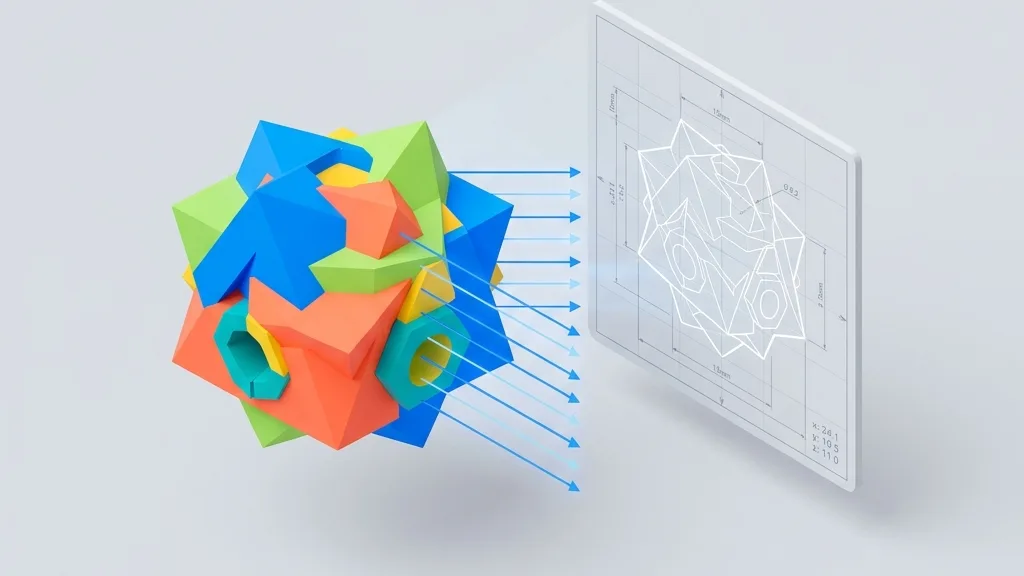
Ditch heavy CAD software for good. Learn how to export STL/STEP files as high-res 2D screenshots with dimension lines and transparent backgrounds directly in your browser—essential for e-commerce product shots and engineering drawings.

Desktop, mobile, VR, mini-programs—which compression combination should you use? This article consolidates the knowledge from the previous four articles into a decision matrix and an automation script—just follow it.
Your GLB file is only 10MB, but on your phone it eats 200MB of VRAM and crashes. Let's take a closer look at what's really going on.